
Blog
STRUCTURED TRAINING VS RANDOM WODS: WHY HARD WORK ALONE IS NOT ENOUGH
GETTING TIRED IS EASY. GETTING BETTER TAKES A PLAN.
Structured training is the difference between doing random hard workouts and actually building progress over time.
A random WOD can make you sweat. It can make your legs burn. It can make you feel like you did something serious.
But hard does not always mean useful.

WHY RANDOM WODS FEEL PRODUCTIVE
Random workouts are attractive because they give you an instant hit.
You finish tired. You feel like you worked. You post the score. You move on.
The problem is that fitness is not built from one heroic session. It is built from repeated, structured effort.
If today’s workout has no connection to yesterday, last week, your current level, your equipment, your fatigue, or your goals, then you are not training. You are guessing.

WHAT STRUCTURED TRAINING MEANS
Structured training does not mean boring.
It means every session has a reason.
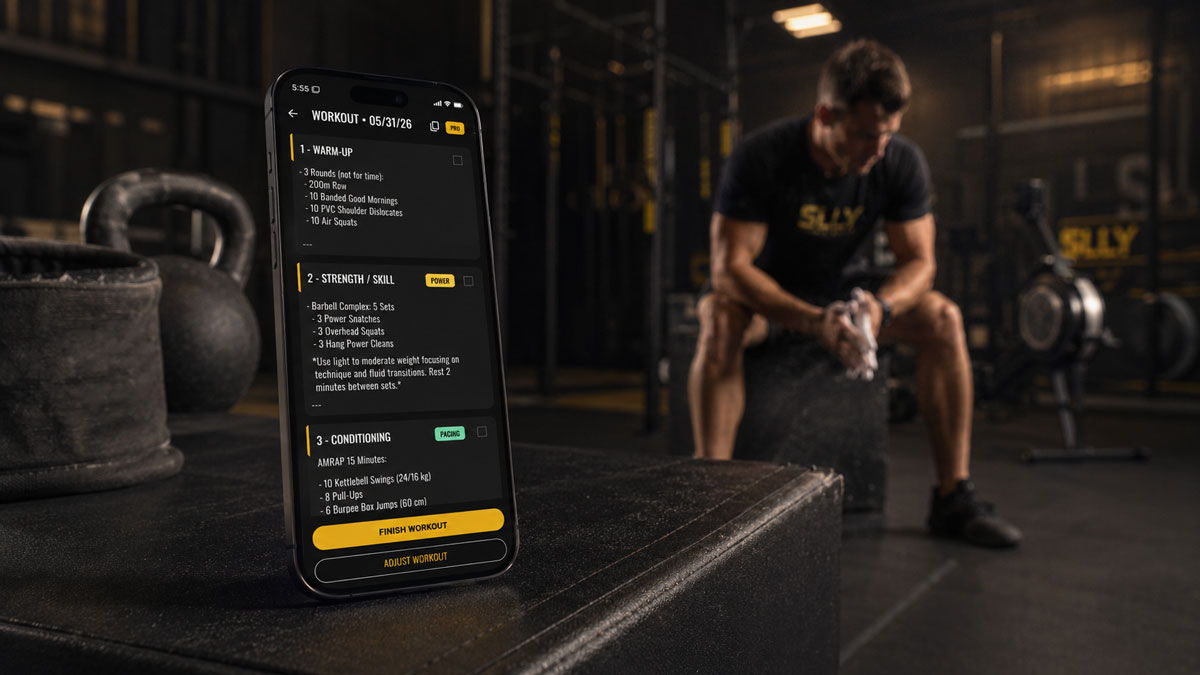
A good training plan knows when to push strength, when to build conditioning, when to practice skill, when to add accessories, and when to let the body recover enough to come back stronger.
A structured CrossFit-style session usually includes:
- Warm-up
- Strength or skill
- Conditioning
- Accessories
- Cooldown
- Coach notes
That structure removes the daily question: “What should I do today?”

WHY PROGRESSION MATTERS
Progression is not random intensity.
Progression means the training moves forward intelligently. More load when it makes sense. More volume when the body is ready. Better pacing. Better movement quality. Better conditioning over time.
Without progression, you may work hard for months and still feel stuck.
That is why structured training matters. It connects your effort to a bigger direction.

THE PROBLEM WITH CHASING PAIN
Some athletes think every workout has to destroy them.
That is ego, not coaching.
A good workout should challenge you, but it should also fit the intended stimulus. Some days should be heavy. Some should be fast. Some should be skill-focused. Some should build steady engine work.
If every day is maximum effort, eventually recovery drops, performance stalls, and the body starts talking back.
BALANCE ACROSS THE WEEK
One workout is only one piece of the week.
If Monday is heavy squats, Tuesday should probably not be random leg destruction with no reason. If you hit high-volume pulling yesterday, maybe today needs a different stress.
Balanced programming looks at patterns: pushing, pulling, hinging, squatting, overhead work, monostructural conditioning, gymnastics, and recovery.
That is how you avoid repeating the same stress until something breaks.
HOW COACHSLY BUILDS STRUCTURED TRAINING
CoachSLY is not built to throw random workouts at you.
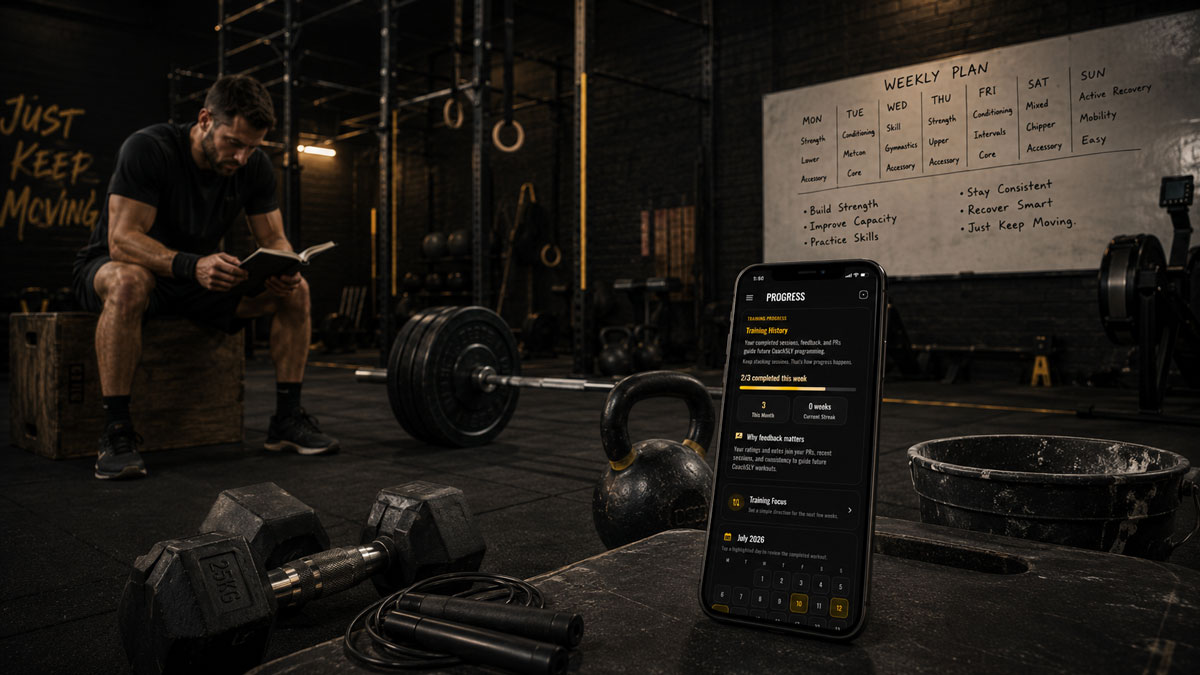
It creates structured CrossFit-style workouts around your level, equipment, time, focus, personal records, feedback, and completed workout history.
The goal is simple: give you the right workout for today without making you overthink the plan.
CoachSLY helps with warm-ups, strength or skill work, conditioning, accessories, cooldowns, and notes so the session feels complete.
This is also why CoachSLY features include workout adjustments, Advanced Constraints, PR-based weights, feedback, and training history.
USEFUL TRAINING RESOURCES
For more on CrossFit-style programming, scaling, and workout structure, visit the official CrossFit website.
You can also read the CoachSLY CrossFit lingo guide, visit the CoachSLY homepage, or learn more about CoachSLY.